Written by Kate, RN, Lead Practitioner at First Avenue Medical Spa Last updated: October 2026 | Reading time: 5 minutes
A chemical peel for pigmentation is a practical way to fade the sun spots Vancouver summers leave behind. By October, many of our Kitsilano patients notice new spots, uneven tone, or dark marks after a breakout. Fall is when a peel works best.
Pigmentation happens when skin makes extra melanin, the pigment that gives skin its colour. UV exposure is the most common trigger.
The Canadian Dermatology Association notes that up to 90% of skin aging on sun exposed areas comes from the sun. That includes flat brown spots called solar lentigines.
Grey skies do not stop the process. Health Canada reports that up to 80% of the sun’s rays can pass through light cloud, mist, and fog. That is why West Coast skin still collects sun damage on overcast days.
The types of pigmentation we see most often include:
A chemical peel uses a medical grade acid solution to lift away the outer layer of skin. Pigmented cells near the surface shed faster, and fresher, more even skin takes their place.
The Canadian Dermatology Association lists alpha hydroxy acids and beta hydroxy acids among the treatments for PIH. It also notes that acid peels can smooth slight discolouration and improve skin tone.
Freshly peeled skin is more sensitive to the sun. Treating pigmentation while UV is still strong can work against you.
Environment and Climate Change Canada notes the UV Index can be high in early September. It drops quickly by October. That lower UV gives new skin a calmer setting to heal in.
Starting a chemical peel for pigmentation now gives your skin the whole winter to improve before spring.
At First Avenue Medical Spa, every peel is chosen after a skin assessment. We look at the type and depth of your pigmentation, your skin tone, and how much downtime suits your schedule.
Our chemical peel menu includes several options that target uneven tone:
Peel strength can be adjusted by layering. Your chemical peel for pigmentation is usually planned as a short series, not a single visit.
A peel may suit you if you:
All skin tones are welcome. For deeper skin tones, we choose the peel type and strength carefully. This lowers the risk of new pigmentation.
Melasma needs extra care. It tends to return with sun exposure. We treat it as an ongoing plan, not a one time fix.
Some pigmentation sits deeper in the skin. Peels work mainly on the surface layers. Deeper or very distinct spots may respond better to light or laser treatment.
Depending on your assessment, your plan may include pigmentation removal with our GentleMax Pro system or a BBL Hero treatment. If you also have textured scarring, our acne scar treatment guide explains other options.
Your visit starts with a skin consultation. Every plan is physician directed, and our Kitsilano clinic has cared for patients from across the West Side since 2008.
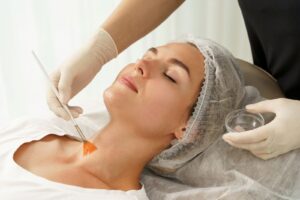
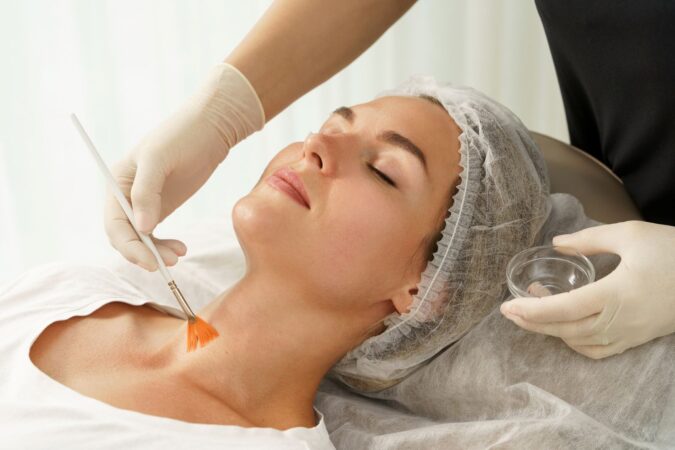
We cleanse the skin, apply the peel, and time it carefully. Most people feel tingling or warmth that settles once the peel is removed.
Lighter peels may cause mild redness for a few hours. Stronger peels can bring visible flaking for several days. Avoid picking at flaking skin, and pause exfoliating products until your skin settles.
Sun protection is the most important part of aftercare. Health Canada recommends a broad spectrum sunscreen with SPF 30 or higher, reapplied at least every two hours outdoors.
The Canadian Dermatology Association also advises protection on cloudy days, since most of the sun’s rays get through light cloud. Pair daily sunscreen with our medical grade skincare range. This helps your chemical peel for pigmentation results last.
Most patients need a series rather than a single peel. We set the number and spacing at your consultation, based on how deep and widespread your pigmentation is.
A peel can help lighten melasma, but it is not a permanent fix. Melasma tends to return with sun exposure, so daily sun protection and maintenance treatments are part of the plan.
Yes, when the peel is chosen with care. We adjust the peel type and strength for your skin tone to lower the risk of new pigmentation.
Skin often looks brighter once the peeling settles. Fading of spots builds gradually across your full series.
Ready to fade summer’s sun spots before winter? Book your consultation at First Avenue Medical Spa in Kitsilano.
Not sure which treatment is right for you? We can help. Explore our complete guide to chemical peels in Vancouver to compare your options.